About me
I've never really been fascinated by coaching.
Or psychology. Or even personal development. I've always been fascinated by people. Not by what they do, but by what they carry.
The gap between who someone really is and who they slowly become after years of adapting. The stories they inherit. The labels they accept. The strengths they stop recognizing because they have lived with them for so long no longer seem special.
I've noticed those things in people for as long as I can remember.
It took me much longer to realize I was doing exactly the same thing.
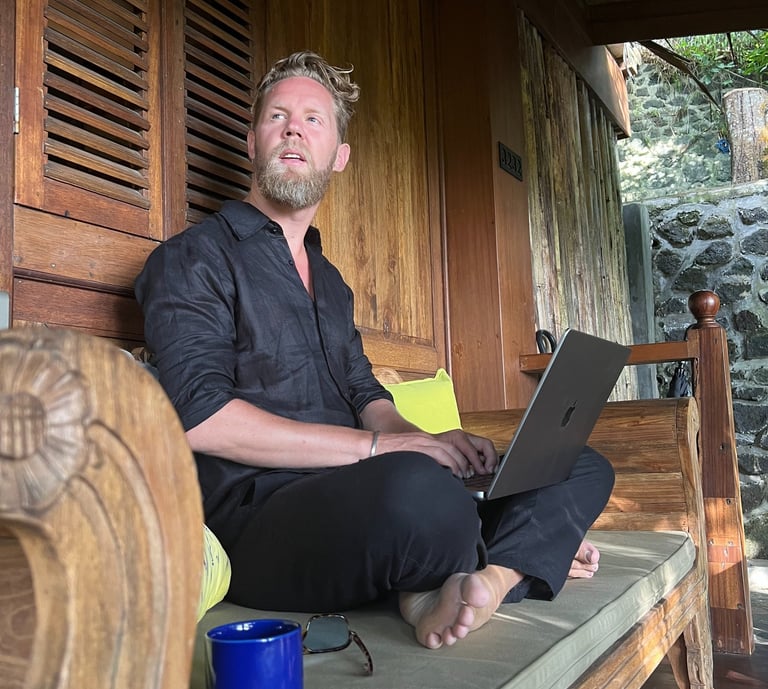
The first story I believed about myself was that I was impulsive.
It was a label I heard often enough that I eventually stopped questioning it. Years later I asked myself a simple question. What if that isn't actually true? The answer surprised me.
What I had called impulsiveness wasn't recklessness at all. It was enthusiasm. Curiosity. A genuine excitement about what might be possible. The label had shaped my behavior more than reality ever had.
Once I saw that, I couldn't stop seeing it. Not just in myself. In almost everyone. People carrying identities they never consciously chose. "I'm not creative." "I'm not confident." "I'm bad with money.""I'm just an introvert." "I'm always the responsible one."
Stories repeated often enough that they quietly become someone's identity. That question has stayed with me ever since.
What part of you disappeared when you started believing a label?


Life kept asking the same question in different forms.
In my early twenties I travelled to South Africa alone. Someone I met there looked at me and said something no one had ever said before. "I genuinely believe in you." It is difficult to explain what that did to me.
Sometimes a single sentence changes nothing. Sometimes it quietly changes everything.
Later I spent more than a decade in the corporate world, working in logistics, sales, marketing and leadership before building my own businesses. One of them grew into a million-dollar company within two years before I eventually sold it.
From the outside it looked like progress. On the inside, a different lesson kept repeating itself. Success doesn't stop people questioning themselves.
If anything, it often hides it better.


Then I tried building a coaching business.
I created the website. Started posting online. Built the brand. And one afternoon I deleted all of it.
The website. The business. Every social media account. Gone.
Not because it wasn't working. Because I was afraid of being seen. Afraid that if I showed something genuine, people would judge it. Or reject it.
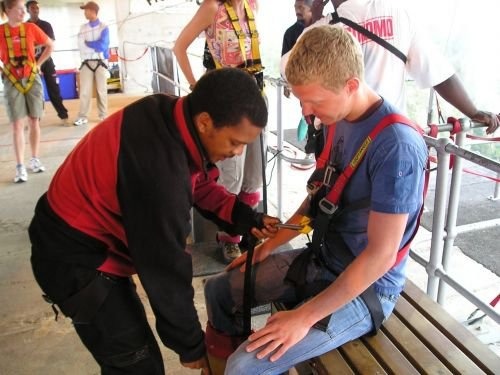
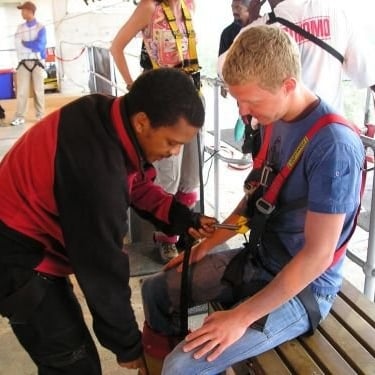
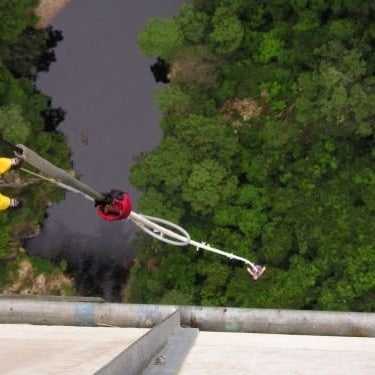
Disappearing felt safer than staying visible. For most of my life I dealt with fear by pushing through it. I bungee jumped because I was afraid of heights. Jumped out of an aeroplane for the same reason. Moved across countries because discomfort usually felt like a sign I should go.
But forcing and understanding turned out to be two very different things. Eventually I realised that fear isn't always an obstacle. Sometimes it's information.
Sometimes it points towards something that deserves understanding instead of overcoming.
That changed far more than another act of courage ever could.
For most of my life I dealt with fear by pushing through it.



Around that same period, life stopped asking theoretical questions.
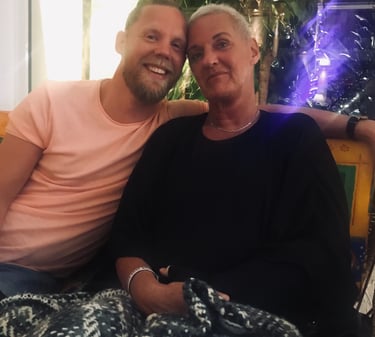
My mother was diagnosed with cancer. Watching her changed me.
For the first time, she and my father started doing all the things they had always planned to do "one day." Travelling. Living. Making memories. It was beautiful. It was heartbreaking. And it made me wonder how many people quietly postpone their own lives while waiting for the right moment.
Later my father developed Alzheimer's while I was living abroad. Earlier in my life I would have immediately returned. Not necessarily because it was what I truly wanted. Because disappointing other people felt impossible. This time I made a different decision. One that some people in my family didn't understand.
For a long time that judgement would have become my judgement. Someone else's opinion automatically became my truth. Not anymore. One lesson had slowly become impossible to ignore.
When someone throws you a ball... you don't have to catch it. Not every opinion has to become your truth. Not every expectation has to become your responsibility. Not every judgement deserves your attention.
Learning that didn't make me care less about people. It helped me finally understand the difference between caring about people... and living according to their expectations.
That distinction quietly changed every important decision that followed, including moving to Paraguay and building a life that reflected what felt true to me rather than what looked sensible to everyone else.


Looking back, I realized the same pattern had always been there.
Business owners started asking for my advice. They usually wanted help growing their companies.
But what fascinated me wasn't the business. It was the person building it.
Again and again I noticed something. People's greatest strengths were often the very things holding them back. The visionary who struggled with structure. The perfectionist who couldn't launch. The highly responsible leader who could never switch off.
And almost nobody recognised their own talent. It felt too ordinary. Too natural. Too obvious. Until someone pointed out that I was doing exactly the same thing.
The ability people valued most in me... I thought everyone had. Apparently they didn't. Looking back, that's almost funny.
We are often the last people to notice the thing that makes us valuable.
Why I do this
Not because I have life figured out. I don't.
Life keeps teaching me new lessons. The difference now is simply that I recognise my own patterns much sooner than I used to.
What I offer isn't certainty. It isn't a perfect blueprint. And it certainly isn't the promise that I'll tell you how to live your life.
What I offer is something I spent years wishing someone had offered me. A clear reflection. Someone willing to notice the patterns you can no longer see. Someone who can help separate your own voice from the stories, expectations and identities you've carried for years.
Because I don't believe most people need another framework. I think most people already know far more than they realise. They've just spent so long listening to everyone else that they've stopped recognising their own voice.
If reading this felt strangely familiar... that's probably where we start.


My work isn't built around a single methodology. It has been shaped by years of exploring entrepreneurship, psychology, leadership, spirituality and human behaviour.
Some of the approaches that have influenced me include:
• Jungian Psychology
• Reiki Practitioner
• NEI (Neuro Emotional Integration)
• Medicine Wheel Numerology
• Human Design
• Shadow work
• Systems thinking
I don't see these as separate disciplines. They are simply different lenses through which we can understand ourselves.
What has shaped my thinking

Contact
Ready to take your next step? Let's chat.
Thijs Wessel
hello@thijswessel.com
By referral and application only
Paraguay— Remote
(C) 2026
THIJSWESSEL.COM